
Published on August 13, 2026
Key Issues in Foreign Trade: COPCI Reforms, End of Tariffs with Colombia, and the Path Toward Customs Modernization
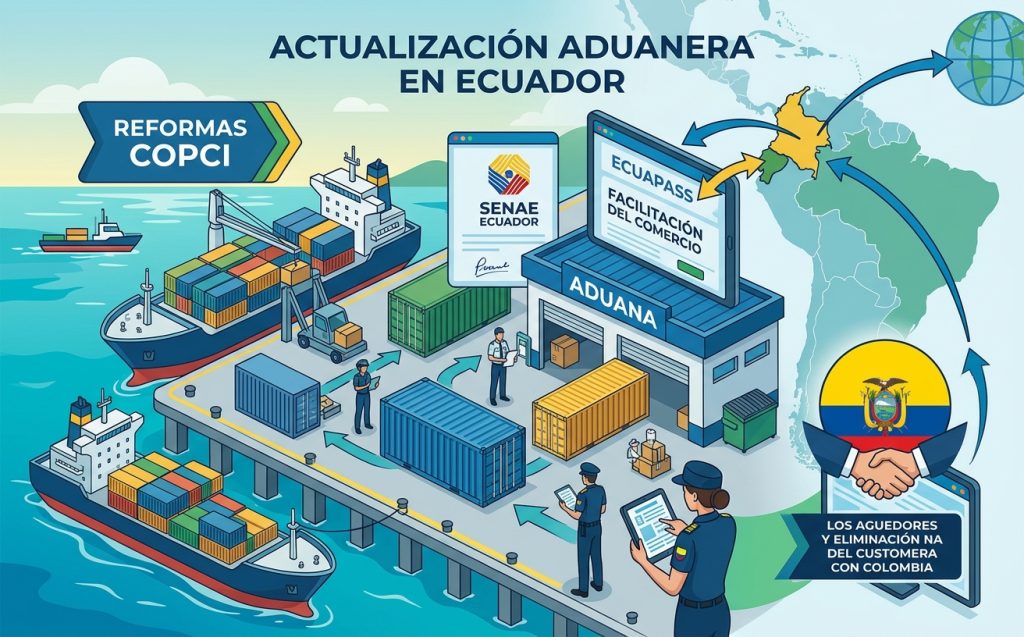
The foreign trade landscape in Ecuador is undergoing key changes driven by the National Customs Service of Ecuador (SENAE). If you are an importer or exporter, staying up to date with customs regulations is essential for optimizing costs, reducing clearance times, and ensuring the competitiveness of your operations.
Below, we analyze the latest news from Ecuadorian customs and its direct impact on your business.
The regulatory framework governing imports and exports in Ecuador is undergoing significant changes aimed at streamlining procedures, facilitating cross-border trade, and strengthening logistics oversight.
1. Elimination of Customs Duties on Imports from Colombia
After months of bilateral negotiations and resolutions within the framework of the Andean Community of Nations (CAN), SENAE officially announced the permanent elimination of the customs duty that had been applied to goods originating in Colombia.
- What does this mean for businesses?This measure restores the smooth flow and balance of trade between the two countries. Ecuadorian importers who supply their production chains with Colombian inputs, raw materials, or finished goods see an immediate reduction in customs duties, eliminating operational costs.
2. Amendments to the COPCI for Logistics Optimization
The national government and customs authorities have promoted reforms to the Organic Code on Production, Trade, and Investment (COPCI) aimed at revitalizing the national logistics chain.
- Highlights:
- Digitization and agility: Streamlining administrative procedures through the ECUAPASS system.
- Improvements in processing times: In collaboration with the World Customs Organization (WCO), SENAE has launched projects to Dispatch Time Study (ETD) to reduce inspection time at ports and airports.
- Greater operational flexibility: Measures to facilitate special customs procedures (such as temporary admission or customs warehousing) that support the manufacturing and export industries.
3. Preparations for Accession to the Amended Kyoto Protocol (CKR)
Ecuador has made significant progress in its process of joining the Amended Kyoto Protocol of the WCO. This international standard aims to harmonize and simplify global customs procedures.
- Medium-term benefits:
- Predictive and intelligent capacity management and control procedures.
- Less red tape in the clearance of goods at the border.
- Greater legal certainty for foreign investment and international trade.
Recommendations for Importers and Exporters
To take advantage of these changes without encountering any issues or delays at customs, we recommend that you:
- Check your tariff classification and subheadings: Make sure that your product subheadings take advantage of the tariff preferences in effect under agreements such as the CAN.
- Manage supporting documentation in a timely manner: Verify that commercial invoices, shipping documents, and certificates of origin comply with current regulations before shipment.
- Have access to specialized advice: Maintaining a well-trained logistics and foreign trade team helps prevent errors in the submission of the Import Customs Declaration (DAI).
In SELIMPEX, we provide the technical support and comprehensive guidance needed to ensure that your customs and foreign trade operations run smoothly and efficiently.
Comments
You must log in to leave a comment.
Comments are closed on this post.