
Published on August 13, 2026
MSC maintains a strong presence on transatlantic routes with connections to Latin America
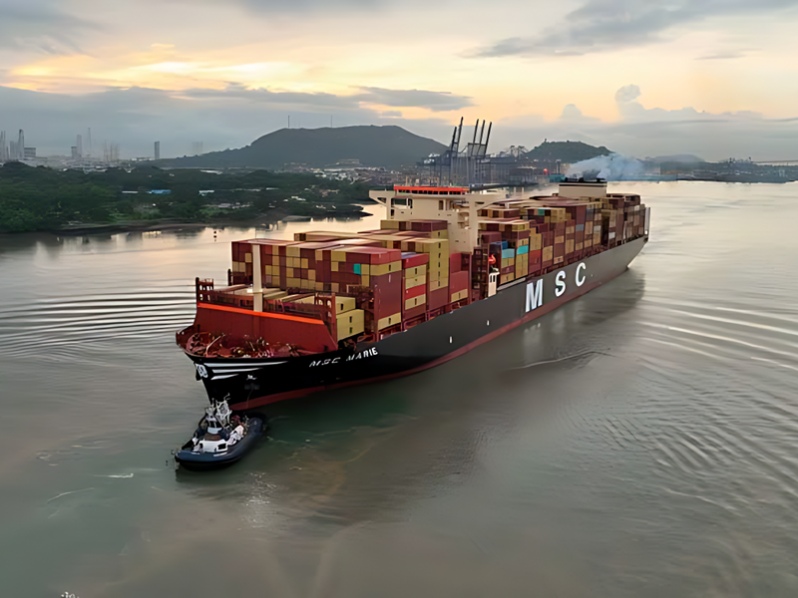
The capacity deployed on transatlantic routes between Europe and North America experienced a slight decline over the past year, against a backdrop marked by service rationalization and a shortage of ships of certain sizes. According to the latest analysis by Alphaliner, this dynamic also has an impact on the services that connect these markets with Latin America.
In July, Alphaliner There were 189 container ships operating on routes between northern and southern Europe and Canada, the United States—including both coasts—and the Gulf of Mexico, with a combined capacity of 1.12 million TEUs, 0.4% less than in July 2025.
In this scenario, MSC maintains a dominant position, with 69 vessels and a capacity of 529,340 TEUs, equivalent to a market share of 44.2%, compared to the 41.8% recorded a year earlier.
The consulting firm notes that part of MSC’s capacity on the transatlantic route also serves cargo flows linked to Latin America. In particular, the ‘California Express’ service transports cargo from the Mediterranean to the region, using Panama as a transshipment point.
In turn, some services specializing in fruit transport connect Latin America with Northern Europe, although they focus part of their operations on the route between Northern Europe and the East Coast of the United States on the westbound leg, which constitutes the dominant segment of the transatlantic route.
In this context, MSC recently discontinued its ‘NEUSEC2‘ service, which connected Northern Europe with the U.S. East Coast and was operated by six vessels ranging from 6,700 to 8,200 TEU. However, following the discontinuation, a large portion of the calls in the United States were transferred to the westbound leg of the ‘Ecuador – NWC – USA’ service, which is directly linked to cargo flows from Latin America.
Alphaliner It points out that this service also saw a significant increase in the size of the vessels used: several 4,100-TEU container ships were replaced by vessels ranging from 7,800 to 8,500 TEUs.
Comments
You must log in to leave a comment.
Comments are closed on this post.