Published on August 13, 2026
Container rates extend gains as ocean carriers cut transpacific capacity.
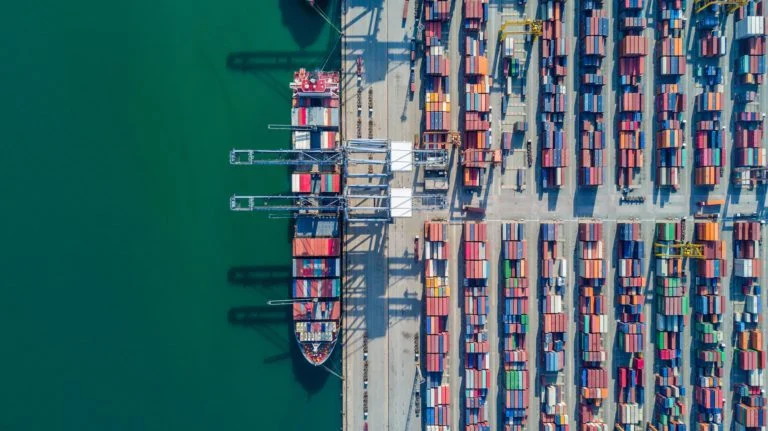
The Drewry World Container Index rose for the second consecutive week, as higher transpacific rates offset declines on Asia-Europe routes, with ocean carriers continuing to manage capacity amid widespread supply chain disruptions.
The Drewry World Container Index climbed for the second consecutive week as shipping lines reduced transpacific capacity, while Xeneta warned that months of disruptions in the Middle East are causing an increasing surge in long-term freight contracts.
Drewry World Container Index (WCI) Updates:
Drewry’s WCI increased by 1% to $4,339 per 40-foot container, driven by higher US-bound rates.
-
Shanghai to New York: Rose 10% to $8,706.
-
Shanghai to Los Angeles: Increased 6% to $6,244.
Capacity Management
Ocean carriers are actively limiting capacity through blank sailings (cancelled voyages), with 10 cancelled voyages in each of the past two weeks and another seven planned for next week. Drewry expects lower capacity to help make rates less volatile in the coming week.
Asia-Europe Routes Decline
The outlook was weaker on Asia-Europe routes.
-
Shanghai to Genoa: Dropped 8% to $5,080 for a 40-foot container.
-
Shanghai to Rotterdam: Fell 5% to $4,425.
Shipping lines have announced new FAK (Freight All Kinds) rates of between $6,700 and $7,100 on Asia-Mediterranean routes starting August 15, although Drewry noted that lower demand raises doubts about whether those levels will hold.
Global Supply Chain Headwinds
The broader East-West market continues to be impacted by security concerns surrounding the Suez Canal and the Strait of Hormuz, restrictions at the Panama Canal, congestion in Asian ports following Typhoon Dolphin, and historically low water levels on the Rhine.
The Impact on Long-Term Contracts
Meanwhile, freight rate benchmarking firm Xeneta stated that nearly six months of disruptions in the Middle East are increasingly impacting the long-term contract market.
"The ripple effect of nearly half a year of disruptions caused by the war in the Middle East is now spilling over into the long-term contract market," said Peter Sand, chief analyst at Xeneta.
Since late February, Xeneta reported significant surges in long-term rates:
-
Far East to US West Coast: Up 41%
-
Far East to US East Coast: Up 40%
-
Far East to Northern Europe: Up 41%
-
Mediterranean Contracts: Up 17%
Spot Market vs. Long-Term Contracts
These gains remain well below the increases seen in the spot market. Xeneta places spot rates from the Far East to the US West Coast at 271% above pre-crisis levels, while US East Coast rates have increased by 287%.
The growing gap has strengthened the position of ocean carriers in contract negotiations. On the route between the Far East and the US West Coast, spot rates currently sit at $4,103 per FEU (Forty-foot Equivalent Unit) above long-term rates, according to Xeneta.
"This is the long-term financial consequence of supply chain disruptions," Sand said, warning shippers not to commit to annual contracts in a bull market. Instead, he recommended shorter agreements that guarantee capacity and allow rates to adjust if the spot market shifts.
Source: gCAPTAIN
Comments
You must log in to leave a comment.
Comments are closed on this post.